Grand National Horse Racing Tips – A Complete Guide
For fans of horse racing, Grand National day is one of the biggest events in the British racing calendar. Held at Aintree Racecourse near Liverpool, it is a long-distance handicap steeplechase famous for its large field and distinctive fences. Horse racing Grand National attracts experienced and regular racing bettors as well as people who may only place a bet once or twice a year. If you’re curious about the Grand National horse racing tips, read on to learn all you need to know.
Top 3 Horse Racing Betting Sites for 2026
| Casino | Ratings | Details | Bonus | Visit | |
|---|---|---|---|---|---|
| 1 |
|
Bet £10 Get £40 in Free Bets | Get the bonus! Betway Review | *New UK customers only. Min Stake: £5. Maximum Free Bet: £30. First bet on a Football, Horse Racing, Cricket, Tennis & Basketball multiple with 3+ selections. Overall odds: 3.00 (2/1) or higher. Free Bets available upon settlement of the qualifying bet, Uber Voucher credited within 72 hours of qualifying bet settlement. No wagering requirements on free spin winnings. Debit Card deposit only (exclusions apply). This offer is valid 7 days from the new account being registered. 18+ BeGambleAware.org. Bet the Responsible Way., #AD, 18+ | |
| 2 |
|
Bet £10 Get £30 Free Bets | Get the bonus! Betrino Review | New Players Only. Deposit Code: BB30, Free bet – one-time stake of 30, min odds 1.5, stake not returned. 1X wager the winnings. Wager from real balance first. Wager calculated on bonus bets only. Max conversion: £200. Valid for 7 Days from receipt. Limited to 1 sport & 5 casino brand/s within the network. Withdrawal requests void all active/pending bonuses. Excluded Skrill and Neteller deposits. Full Terms apply., #AD, 18+ | |
| 3 |
|
Bet £10 and Get £30 in Free Bets | Get the bonus! bet365 Review | Registration Required. 18+. Min deposit requirement. Free Bets are paid as Bet Credits and are available for use upon settlement of qualifying bets. Min odds, bet and payment method exclusions apply. Returns exclude Bet Credits stake. Time limits and T&Cs apply. Please gamble responsibly, GambleAware.org #AD |
What Is the Grand National Horse Racing?
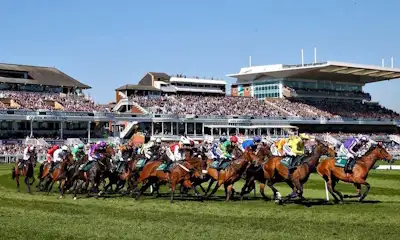
The horse racing Grand National, held at Aintree Racecourse each spring, is arguably the most important National Hunt race of the year. It is a handicap steeplechase, meaning horses carry different weights according to their assessed ability.
The race is run over around four miles and two-and-a-half furlongs and takes place on Aintree’s separate Grand National horse racing course. In the race, the horses also face 30 fences, including famous obstacles such as Becher’s Brook and the Canal Turn. These features make it very different from a standard, shorter steeplechase and place considerable demands on stamina, jumping and concentration, which makes it particularly interesting when it comes to horse racing betting.
Why the Horse Racing Grand National Draws Racing Fans and Bettors
The Grand National has a much wider audience than most National Hunt races. Its long history, distinctive fences and large field help it to attract a huge number of viewers. Simultaneously, and also increasing the viewership, is a huge amount of betting interest. With 34 runners able to take part, there are many horses and prizes to consider. At the same time, the handicap gives runners with different levels of ability the chance to compete against one another.
How Does the Grand National Horse Racing Work?
The Grand National is not a difficult race to follow. It is currently run over four miles, two furlongs and 74 yards, and horses complete two circuits of the National course and jump 30 fences. There are sixteen individual fences. Fourteen are jumped twice, while The Chair and Water Jump are only taken on the first circuit.
Distance, Jumping and Stamina
Stamina is essential to success in the horse racing Grand National, as a horse must run more than four miles while jumping 30 fences. However, a horse also needs to jump consistently. A runner that uses too much energy early on in the race may struggle during the closing stages, while making repeated jumping mistakes can quickly end its race.
Therefore, jockeys need to find a sustainable rhythm and conserve enough energy for the second circuit of the track. Just because a horse has stayed long distances elsewhere, it does not necessarily mean it will handle the Grand National’s challenges.
How a Large Field Changes the Race
The horse racing Grand National currently has a maximum field of 34 runners, which is considerably larger than many National Hunt races. This changes the nature of the race, particularly when horses approach the early fences together, as there is extra traffic. Jockeys need to find space without giving away too much ground, while horses must cope with the runners immediately around them.
Falls or unseated riders can also leave loose horses on the course. These horses may continue running and can interfere with other runners, so concentration and adaptability are important throughout the race.
How Do Horses Qualify for the Grand National?
There are strict qualification criteria for a horse to enter the Grand National. In the 2026 race, runners had to be aged seven or older, meet minimum steeplechase experience requirements and earn a sufficiently high handicap rating. They also needed proven form over longer distances before the qualification deadline.
Ratings, Previous Form and Experience
A horse needs to have started in at least six steeplechases, including at least one during the current season. They must also previously have finished in the first four in a steeplechase officially described as at least two miles, seven-and-a-half furlongs. In 2026, the minimum rating was 130. The purpose of these rules is to ensure that runners have already demonstrated a suitable level of ability, stamina and experience over fences before they take on Aintree.
How the Final Field Is Decided
In 2024, the maximum horse racing Grand National field was reduced from 40 to 34 runners in order to improve safety for riders and horses. Therefore, if more qualified horses remain than available places, their handicap ratings determine their order in the field. Higher-rated horses therefore have priority. Reserves can replace horses that come out after declarations. From 2026, up to six reserves are available and can enter the field until 1pm on the day before the race.
Cheltenham Festival Betting
It is no surprise that the horse racing Cheltenham Festival is one of the biggest weeks of the year for the UK betting industry. Markets for the major races can open months before the meeting, which means you will often see Cheltenham Festival betting odds well before the final fields are known.
If you bet ante-post, you may get a better price than is available closer to the race. However, standard ante-post rules normally mean you lose your bet if the horse does not run unless Non-Runner No Bet or another concession applies.
You will know which horses are due to run after final declarations have been made, and you should then still consider field size, race conditions and any late changes to the going.
Cheltenham is highly competitive, so there is no benefit to betting simply because a horse has a familiar name or short price. Look at the race itself and whether the conditions suit the horse.
Understanding the Grand National Handicap
In order to give more horses the chance of competing, the Grand National is a handicap race. This means that the horses do not all carry the same weight, with better horses generally made to carry more and lower-rated horses less. The result is less of an advantage for specific horses and a more competitive race.
How Weights Are Allocated
In order to allocate weights, prior to the race, the British Horseracing Authority (BHA) handicapper assesses the runners. For the 2026 Grand National, the highest permitted weight was 11st 12lb, and the lowest was 10st 2lb. A horse’s position in the handicap is linked to its rating and form, so as explained, a high-class horse may have to give considerably more weight to a lower-rated rival. Remember that the weight itself should be considered alongside the horse’s ability rather than viewed in isolation.
Why Weight Carried Matters over a Long Distance
Carrying extra weight can become a real burden over the Grand National’s long distance. A horse must keep going for more than four miles while also jumping 30 fences. This does not mean the top-weighted horses cannot win, and one of the keys to betting on the race is judging whether a horse’s ability is enough to compensate for its handicap. The handicap also helps create a more interesting betting market because runners carrying different weights can still have realistic chances.
Grand National Fences
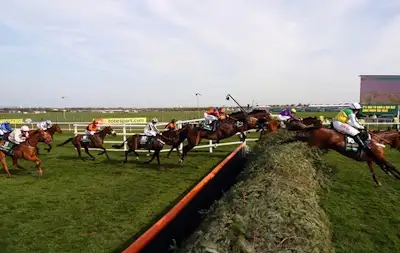
The fences in the horse racing Grand National are famous, and they are a large part of what makes the race so distinctive. There are 16 individual fences, with 14 jumped on both circuits and a total of 30 jumps. The fences are not identical. Their height, width, ditches and position on the course vary, so horses face different challenges as the race progresses.
Today, the fences are built using spruce woven into a flexible plastic birch structure rather than the traditional solid thorn fences previously used. The way a horse approaches a fence is very important. A horse may jump well when it has space but struggle when surrounded by other runners or approaching an obstacle at the wrong angle.
As the race continues and horses become tired, jumping accuracy becomes more important. A mistake that a horse might recover from early can prove much more costly towards the end of the second circuit. Here are some of the more famous fences:
Becher’s Brook
Becher’s Brook is fence six and 22 and is one of the best-known obstacles at Aintree. It is named after Captain Martin Becher. He was unseated there during the first official horse racing Grand National in 1839 and ended up in the brook. The fence has been modified several times, including changes to reduce the drop on the landing side, but it remains one of the race’s most recognisable obstacles.
The Chair
The Chair is only jumped on the first circuit, and it is the highest fence on the course at 5ft 2in. It also has a 5ft ditch on the take-off side and a raised landing area, so its size and construction make it a real jumping test. The fence takes its name from the chair once used by the distance judge.
Foinavon
Foinavon is fence seven and 23 and takes its name from the surprise winner of the 1967 Grand National. During that race, a pile-up and refusals caused chaos at the fence. Foinavon avoided the trouble and went on to win at odds of 100/1. The obstacle itself is relatively small at 4ft 6in, but its role in the 1967 race has elevated it to fame.
Canal Turn
Canal Turn is fence eight and 24. The obstacle is 5ft high, but its most distinctive feature is what happens immediately afterwards. Horses must make a sharp 90-degree left turn after jumping it, and the nearby Leeds-Liverpool Canal gives the fence its name. Therefore, positioning is important as jockeys need to approach the fence accurately while also preparing for the turn.
Valentine’s Brook
Valentine’s Brook is fence nine and 25. It stands 5ft high and has a brook on the landing side. The original name of the fence was Second Brook, and its present title is linked to Valentine, a horse said to have jumped the obstacle hind legs first in 1840. It comes straight after Canal Turn, so horses need to regain their rhythm quickly before facing another challenging jump.
Grand National Horse Racing Tips – What Should You Look For?
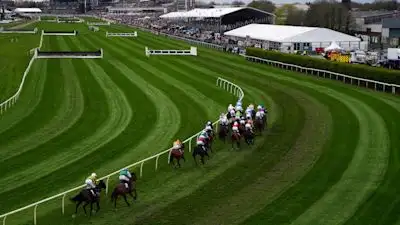
If you are planning to bet on the Grand National, you need to look into several factors rather than just the overall reputation of a horse or trainer. The most useful Grand National horse racing tips will help you gain a sense of how well each horse’s form and characteristics fit the particular demands of Aintree. Try to consider all of the following to gain an overall picture of a horse’s chances:
- Previous jumping form – Look for reliable jumping against tough opposition.
- Experience over longer distances – Proven staying form can be particularly useful.
- Course experience – Previous Aintree form shows the horse has handled the fences.
- Handicap mark and weight – Consider ability alongside the weight being carried.
- Recent form – Check whether the horse is currently running competitively.
- Ability on expected going – Some runners clearly prefer particular ground conditions.
- Stamina – The horse must be able to maintain its effort for more than four miles.
- Trainer form – Current stable form can provide useful additional context.
- Jockey experience – Horse racing Grand National experience can help in a large field.
- Previous major staying form – Good performances over distance are a must for success.
What Makes a Horse Suited to the Grand National?
The Grand National is a particularly demanding race that requires more than simple speed or class. A suitable horse needs enough stamina for the distance, reliable jumping and the temperament to cope with a large field, traffic, changes in pace, and loose runners.
Stamina and Jumping Reliability
Stamina is essential to success in the Grand National as horses need to race for more than four miles. A runner that appears comfortable early can still struggle during the closing stages. Reliable jumping is equally important. With thirty fences to negotiate, there are many chances to make a mistake. Therefore, a horse that regularly jumps accurately and maintains its rhythm has an advantage over one that tends to make repeated errors.
Temperament, Pace and Adaptability
A horse also needs to cope with the atmosphere, large field and changing pattern of the Grand National. Some horses are comfortable racing in big groups, while others perform better with more space. The pace can change quickly, so adaptability also matters. Previous experience can help, but it is not a guarantee that the horse will cope well on the day.
The Grand National Course
The Grand National is run on Aintree’s separate National course rather than its conventional Mildmay track. The race’s combination of distance, large field and obstacles gives horses and jockeys a very different test from a standard steeplechase.
As mentioned, the horses complete two circuits, although The Chair and Water Jump are only jumped on the first. Finding a rhythm is vital. A jockey needs to negotiate the obstacles safely while avoiding traffic and maintaining a good position without asking the horse to use too much energy early.
The long distance also means the course becomes more challenging as the race develops. A horse travelling well on the first circuit may find the second considerably harder.
Course conditions add another variable factor. Softer ground can make the distance more demanding, while faster conditions can increase the pace. Therefore, previous Aintree form is useful, but it is vital to consider the conditions on the day.
Grand National Race Distance and Conditions
The Grand National is currently run over four miles, two furlongs and 74 yards, so it is the longest race in British jump racing. Horses therefore need to conserve energy as well as stay the distance. Going too quickly early can leave little in reserve after the final fence, particularly when conditions make the ground more demanding.
How the Going Affects Performance
Going conditions can have a significant impact on the nature of the horse racing Grand National. Soft ground generally requires more energy, so stamina becomes even more important, while faster ground can produce a faster overall pace. Conditions also influence how horses approach and land over the fences.
Remember that horses differ. A runner with excellent form on good ground may be less effective when conditions become soft. Therefore, check previous performances on similar going and assume that good form in general automatically transfers to Aintree.
History of the Grand National
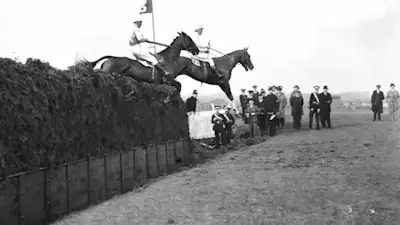
The Grand National’s history can be traced back to the early 19th century. The race has always been set at Aintree, and it has gradually become one of the best-known events in British horse racing. Over the years, its format has changed many times, but the combination of long-distance steeplechasing and distinctive Aintree fences remains central to its identity.
Early Years at Aintree
The first official running is generally said to have taken place in 1839, when Lottery won what was then called the Grand Liverpool Steeplechase. Horses faced a very different course, which included a stone wall and ploughed land. In 1843, the race became a handicap, and it gradually developed into the horse racing Grand National we recognise today. Aintree itself has always been central to the event despite having to survive periods of uncertainty and several changes in ownership.
How Safety Changes Shaped the Modern Race
The Grand National course has changed considerably over the years as racing authorities have looked to improve safety. Fences have been remodelled, landing areas altered and modern flexible cores introduced. The start has also changed, while the maximum field was reduced from 40 to 34 in 2024.
Other changes include higher minimum eligibility standards and additional veterinary scrutiny. The result is a modern race that retains its distinctive fences while offering a safer environment for horses and jockeys.
Famous Grand National Winners
More than 180 years of racing has produced several famous Grand National winners. Some are remembered for repeated victories, while others became part of racing history because of the circumstances surrounding their success.
Record-Setting and Repeat Winners
To date, Red Rum is the only horse to have won the Grand National three times, in 1973, 1974 and 1977. He was trained by Ginger McCain and ridden to his first two victories by Brian Fletcher. Tiger Roll is another horse that rose to fame after trainer Gordon Elliott and jockey Davy Russell won consecutive Nationals in 2018 and 2019.
Victories That Changed the Race’s Story
Few Grand National victories are remembered as well as Foinavon’s 100/1 success in 1967. Trained by John Kempton and ridden by John Buckingham, he avoided a major pile-up and went on to win. Mon Mome produced another famous outsider victory in 2009. Venetia Williams trained the 100/1 winner, with Liam Treadwell riding on his Grand National debut.
Grand National Betting
The Grand National is hugely appealing to horse racing bettors for a number of reasons, such as its fame and the large number of runners. There is also a culture of betting surrounding the race, and even those who rarely bet often take part. The simplest bet to place is a win bet on one runner, but it is far from the only option. When betting on the Grand National, make sure you use a bookmaker that is licensed and regulated by the Gambling Commission(UKGC) .
Why the Grand National Market Is So Varied
With up to 34 runners and handicap conditions, the range of odds on horses in the Grand National can be huge. There are usually short-priced leading runners alongside outsiders at much higher prices. However, with handicap in place to make the race competitive, the odds alone do not tell you the full story behind a runner. Look at the reasons behind the odds rather than simply choosing the favourite or highest price.
How Odds and Markets Change Before the Race
Grand National odds are available well in advance of the race, and they can change as form, declarations, going and betting activity change. Bookmakers also offer different markets and promotions. When exploring odds, be sure to take care with details such as each-way place terms, as the number of places and place fractions offered can differ considerably between bookies.
How to Research Grand National Horse Racing Betting
One of the best Grand National horse racing tips is to start by considering the demands of the race rather than looking for a familiar horse’s name when deciding who to bet on. Compare each runner’s recent form, jumping record and experience over longer distances. Then consider its handicap weight, likely going and whether it has previous experience at Aintree or in similar staying races.
Try to build as full a picture as possible. A horse may have excellent recent form but little evidence it will stay the distance, while another may be proven over long trips but arrive in poor form.
Historical Trends vs Race-Specific Information
When doing your research, looking at historical data can be useful as it shows what types of horses have succeeded in previous years. However, this should not replace current information. The field, weights, going and form change every year and the race itself has also changed over time, so use historical statistics as context, and then give more importance to the latest information.
Grand National Traditions and Popularity
The Grand National is a cultural phenomenon in the UK. As discussed, its history stretches back to the 19th century, and Aintree and famous fences such as Becher’s Brook and Canal Turn are firmly established in the popular consciousness.
The large field is another major part of the race’s identity. With dozens of horses competing over more than four miles, the race looks and feels very different from most other National Hunt contests.
This has helped the Grand National attract a huge number of viewers from every walk of life. In turn, this has made betting and workplace or family sweepstakes a traditional part of Grand National day for many people.
As a result, the horse racing Grand National occupies a special position in British sporting culture. It remains a specialist long-distance steeplechase, but it is also an annual sporting event that is looked forward to by a much wider audience.
